
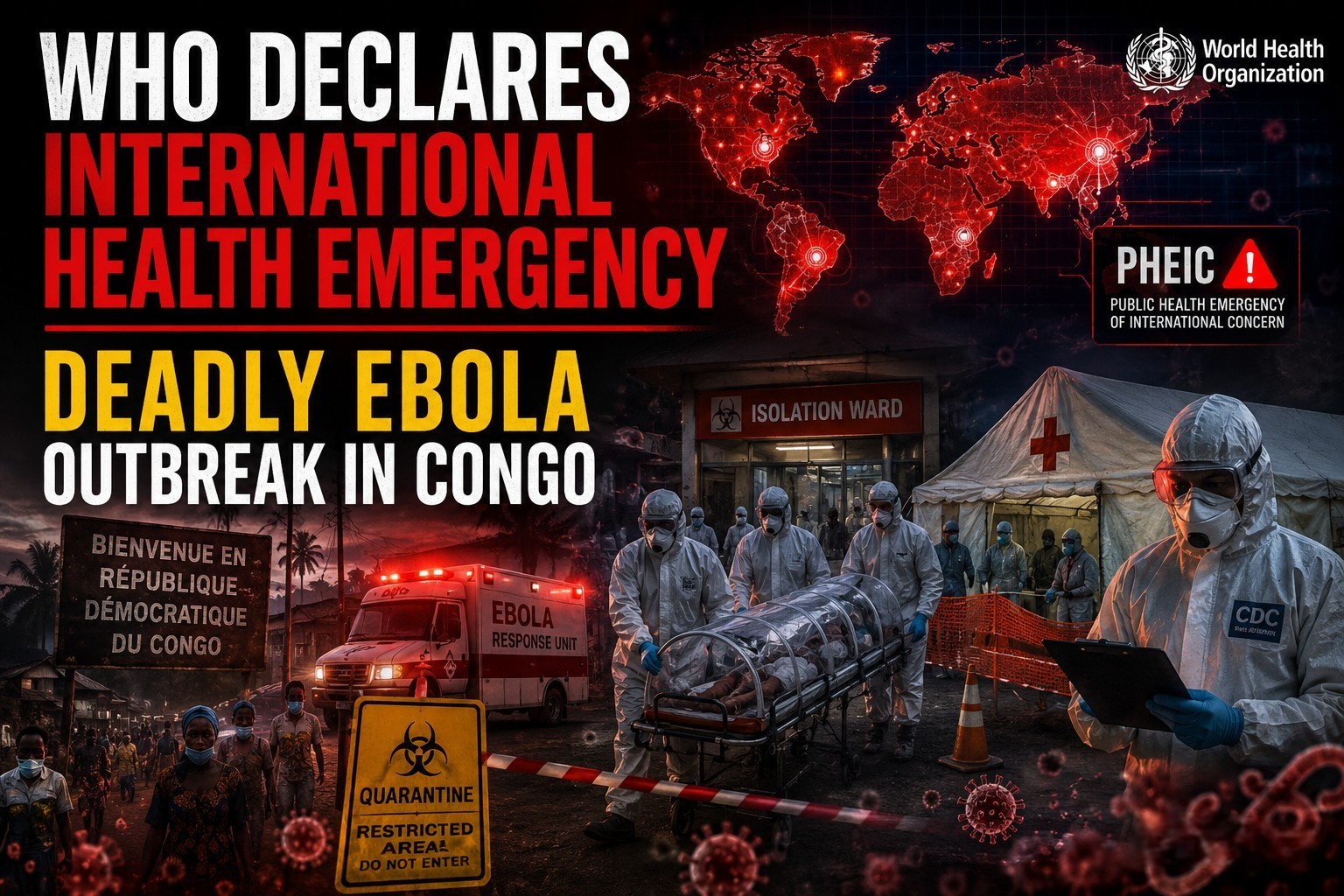
The World Health Organization (WHO) has officially declared an international health emergency following a deadly Ebola outbreak in the Democratic Republic of Congo. The outbreak, linked to the rare Bundibugyo strain of the Ebola virus, has already claimed dozens of lives and raised concerns among global health authorities.
According to reports, the virus first emerged in eastern Congo before spreading toward nearby regions, including parts of Uganda. Health officials are now racing to contain the outbreak before it escalates further.
What Is Happening in Congo?
The Democratic Republic of Congo has faced several Ebola outbreaks in the past, but experts say this situation is particularly concerning because it involves the less common Bundibugyo strain. Unlike the more widely studied Zaire Ebola strain, there are fewer approved vaccines and treatment options specifically designed for Bundibugyo Ebola.
The outbreak reportedly began in remote mining areas where healthcare access is limited. Due to movement between villages and neighboring countries, authorities fear wider transmission if immediate action is not taken.
WHO declared the situation a “Public Health Emergency of International Concern,” a designation used only during serious international health threats.
Why WHO Declared an International Health Emergency
WHO issues this type of declaration when an outbreak poses a risk beyond national borders and requires coordinated international action. The emergency declaration allows countries and health organizations to mobilize funding, medical teams, vaccines, and emergency response systems more quickly.
Officials are especially concerned because:
- The outbreak involves a rare Ebola strain
- Cases have crossed regional borders
- Healthcare infrastructure in affected areas is weak
- Conflict zones are making medical response difficult
- Population movement increases the risk of spread
Despite the emergency declaration, WHO has not classified the outbreak as a pandemic.
What Is the Bundibugyo Ebola Strain?
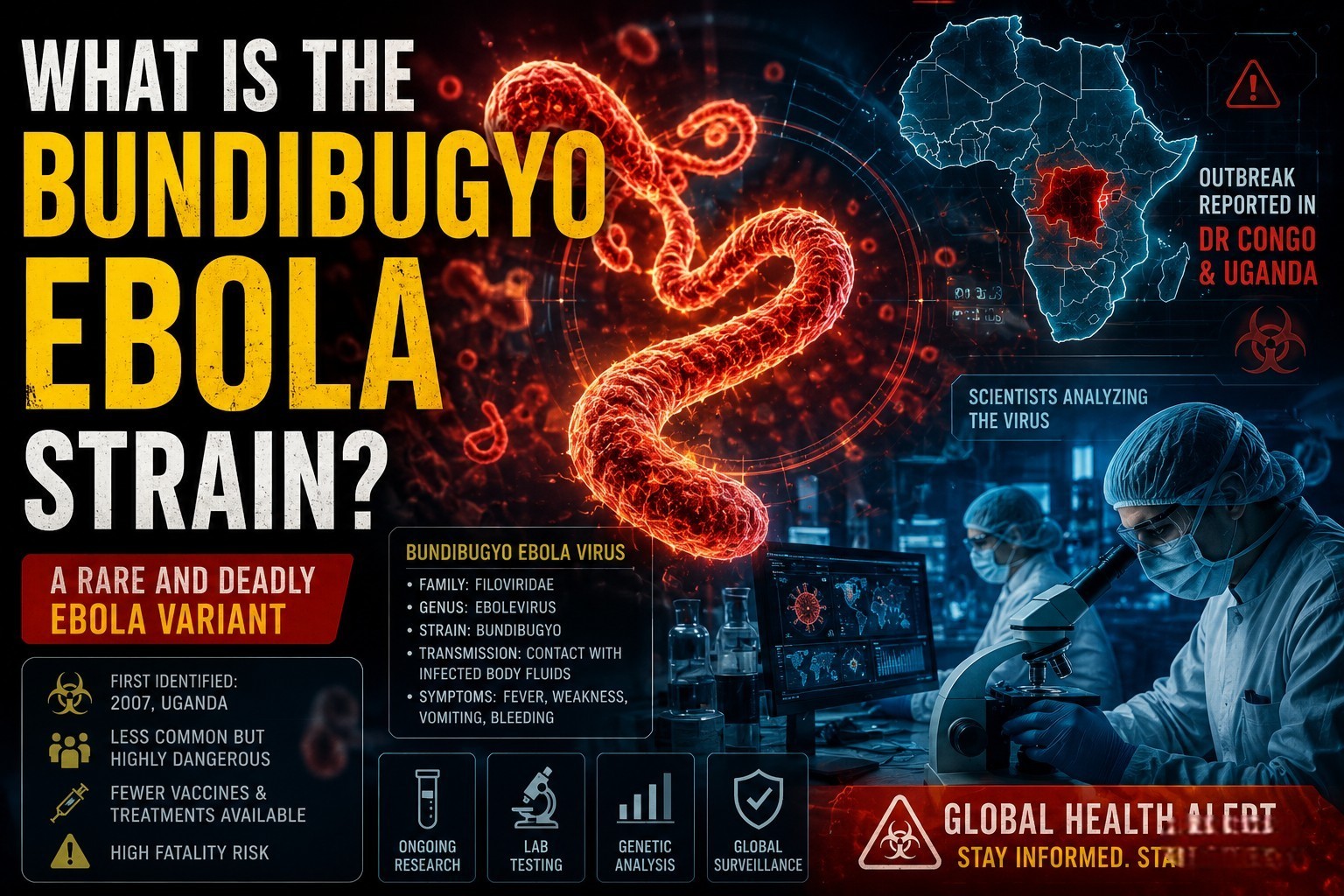
The Bundibugyo strain is one of the lesser-known forms of Ebola virus disease. It was first identified in Uganda in 2007 and is considered highly dangerous, though historically less widespread than the Zaire strain.
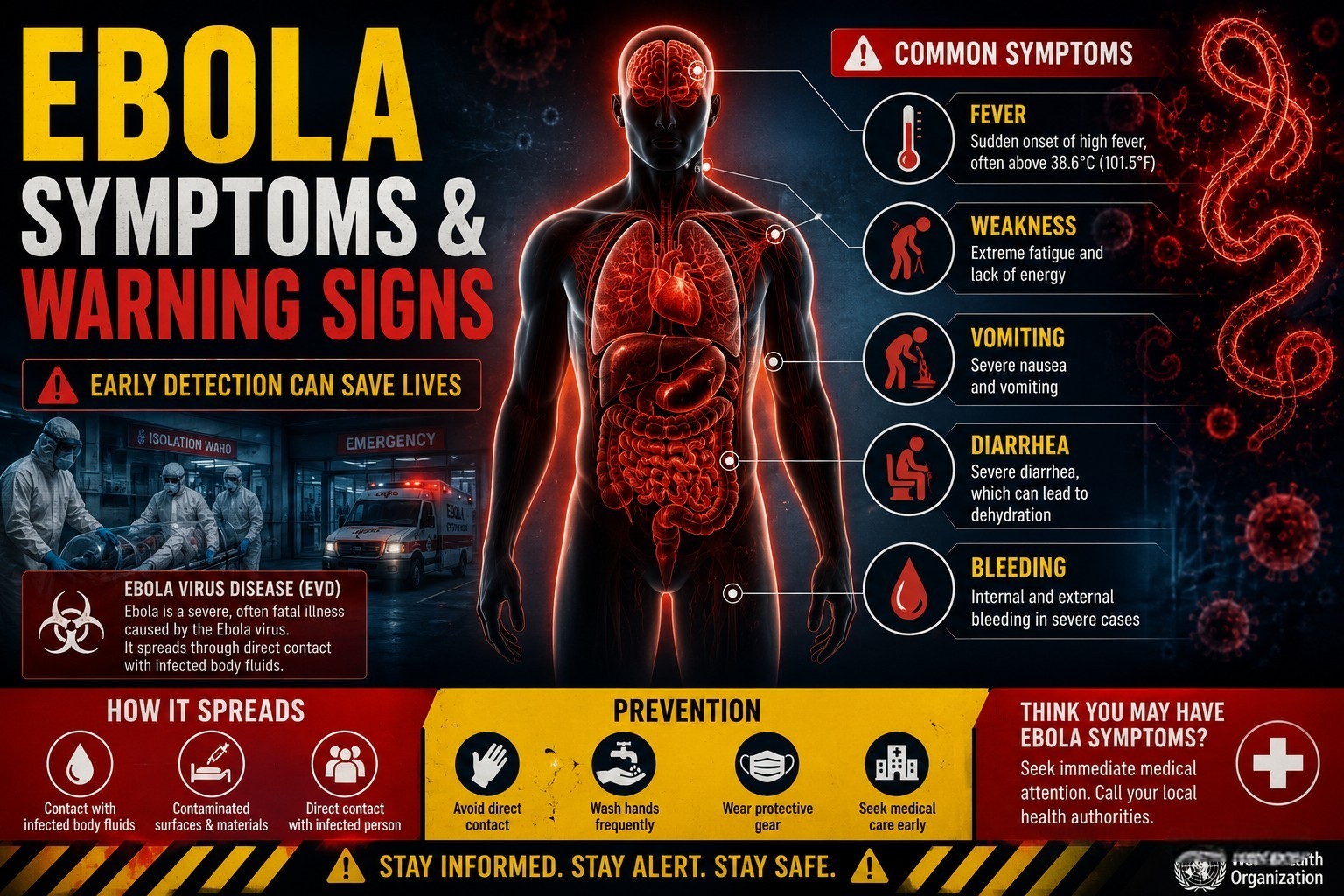
Symptoms are similar to other Ebola infections and may include:
- High fever
- Severe weakness
- Muscle pain
- Vomiting
- Diarrhea
- Internal and external bleeding in severe cases
The virus spreads through direct contact with infected bodily fluids or contaminated surfaces.
Can Ebola Spread Globally?
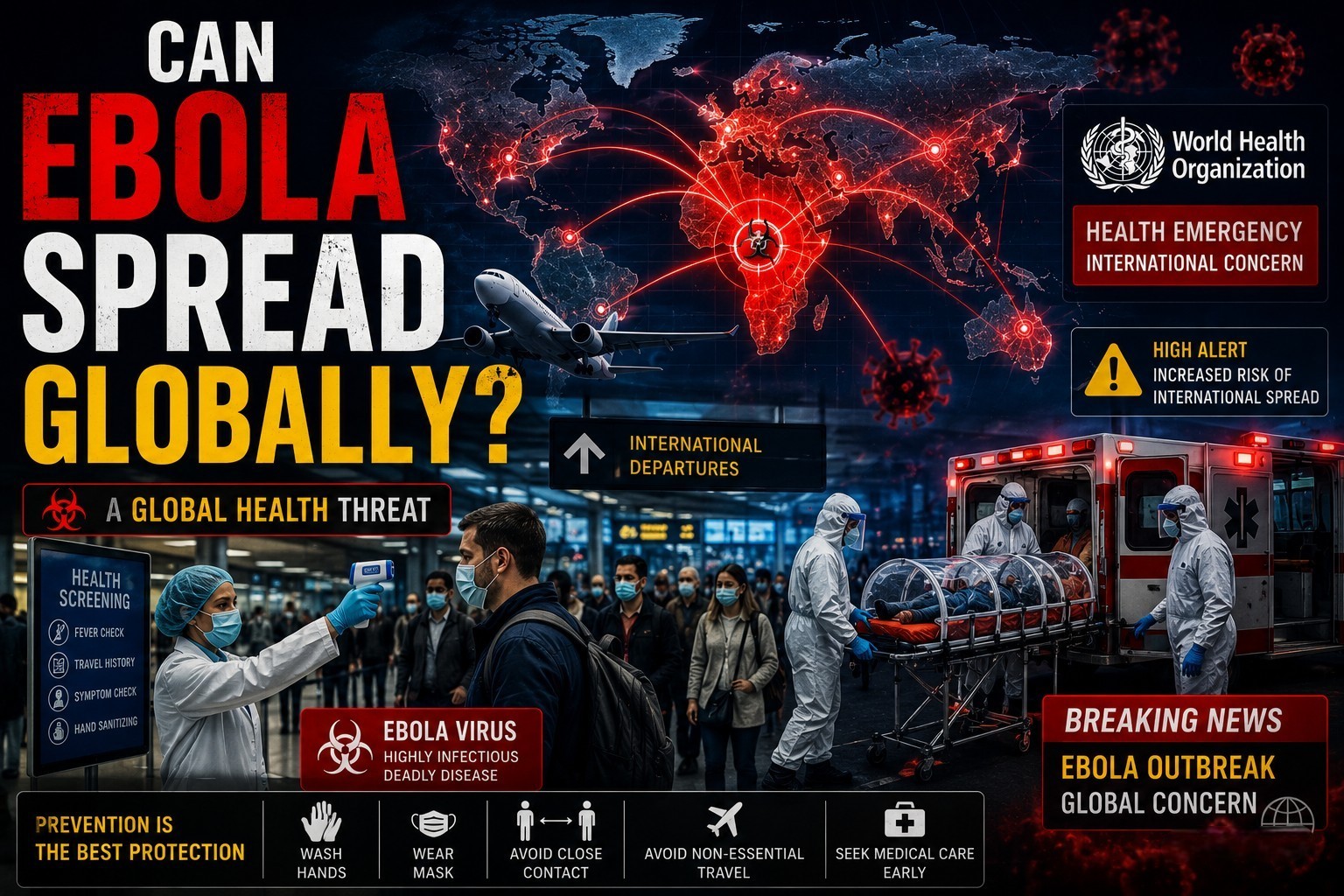
Health experts say the risk of global spread remains low compared to airborne viruses like COVID-19 because Ebola requires close physical contact for transmission. However, international travel and weak border screening systems can still contribute to isolated imported cases.
WHO and African health agencies are currently increasing:
- Contact tracing
- Border monitoring
- Emergency treatment centers
- Public awareness campaigns
- Medical supply distribution
Neighboring countries have already been placed on alert.
Are Vaccines Available?
Existing Ebola vaccines have shown strong effectiveness against the Zaire strain, but researchers are still studying how effective they are against Bundibugyo Ebola.
Medical teams are reportedly testing experimental treatments and expanding emergency vaccination programs in affected regions. International support from humanitarian and health organizations is also increasing.
Global Concern Grows
The outbreak has renewed global concerns about emerging infectious diseases and the preparedness of healthcare systems in vulnerable regions. Experts warn that rapid containment is essential to prevent the situation from worsening.
Several governments and health organizations are closely monitoring developments while urging travelers and healthcare workers to follow official safety guidance.
As investigations continue, WHO says the coming weeks will be critical in determining whether the outbreak can be contained quickly or develops into a larger regional crisis.
FAQ Section
What caused the Ebola outbreak in Congo?
The outbreak is linked to the rare Bundibugyo strain of the Ebola virus, though investigations into the exact source are still ongoing.
Is Ebola airborne?
No. Ebola primarily spreads through direct contact with infected bodily fluids, not through the air like COVID-19.
How many people have died in the outbreak?
Reports indicate that dozens of people have died, with health officials continuing to verify suspected cases.
What are the first symptoms of Ebola?
Early symptoms include fever, weakness, headache, muscle pain, vomiting, and diarrhea.
Why is the Bundibugyo strain concerning?
There are fewer vaccines and treatment options specifically developed for this rare Ebola variant.